Most of us use tap water the same way we breathe air: constantly, and without thinking too hard about the content. But something doesn’t feel right? A headline about “forever chemicals” hits your feed, or you move into an older NJ house, and suddenly you’re questioning every glass of water like it’s foreign.
The good news: in New Jersey, you don’t have to guess. Depending on your municipality, your water supplier must publish an annual Consumer Confidence Report (CCR), a transparent summary of what suppliers find in the water sent yearly by July 1.
This isn’t a spreadsheet deep-dive but a “systems” tour of how NJ water is sourced, treated, monitored, and reported so you can understand what’s in your tap water without spending your weekend decoding parts-per-billion tables.
American Water is the largest regulated water and wastewater utility company in the United States. In plain terms, they’re a private company that runs local water systems on behalf of towns, cities, and regions, under state regulation and with contract terms.
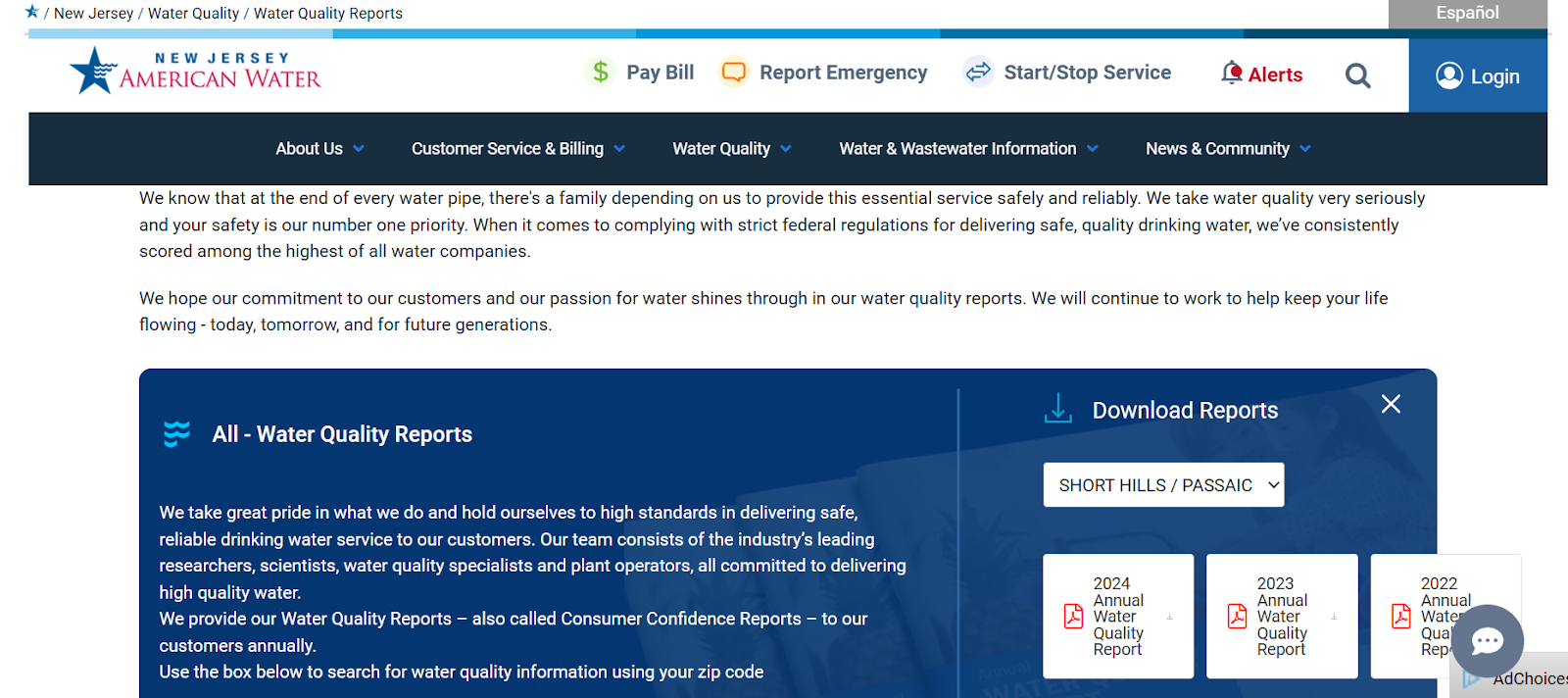
If you live in many parts of NJ, your water may come from New Jersey American Water, one of the state’s biggest providers. They make CCRs easy to access: you can pull the report by ZIP code from their website.
What these reports usually tell you (in human terms):
Think rivers/reservoirs (surface water), wells (groundwater), or a blend. Source matters because surface water tends to need more treatment for microbial risks, while groundwater can carry more naturally occurring minerals. Geography is always a factor for a home’s water system, as it is affected by the municipality.
Most systems disinfect. That means chlorine or chloramines are commonly present at low levels to keep water safe as it travels through miles of pipe. The tradeoff is that disinfectants can react with natural organic material and form disinfection byproducts. This doesn’t mean the water is bad, but it means the system is balancing microbial safety with chemical byproduct control, a constant engineering tightrope to think about.
This is the “earth is made of stuff” category: minerals, salts, or metals that occur naturally (and vary by source). CCRs also cover regulated contaminants and whether the system met standards.
Here’s a key mental model: many of the most anxiety-inducing issues (especially lead or copper) aren’t about the reservoir but about the last stretch: your service line, your building plumbing, your fixtures. The EPA notes lead typically enters drinking water through corrosion of plumbing materials, especially lead service lines and older fixtures.
So even if the “system water” leaving the plant is pristine, the water at your tap can still be influenced by what it touches on the way in. Copper pipes as a reliable material for a water system, are often nonnegotiable, but material leakage is going to happen no matter what.
Concerned about what’s actually in your tap water? Download our Free Water Treatment Guide for straightforward guidance on testing, filtration options, and hard water solutions for North Jersey homes. 👉 Get the Free Guide
If you’re in parts of Passaic County or nearby areas served by PVWC, you’re dealing with a large regional public utility commission that publishes its own CCRs and water quality updates online. They also service their water supply to some parts of Essex, Bergen & Morris counties; their reports are paramount to staying in the loop of what’s in the water.
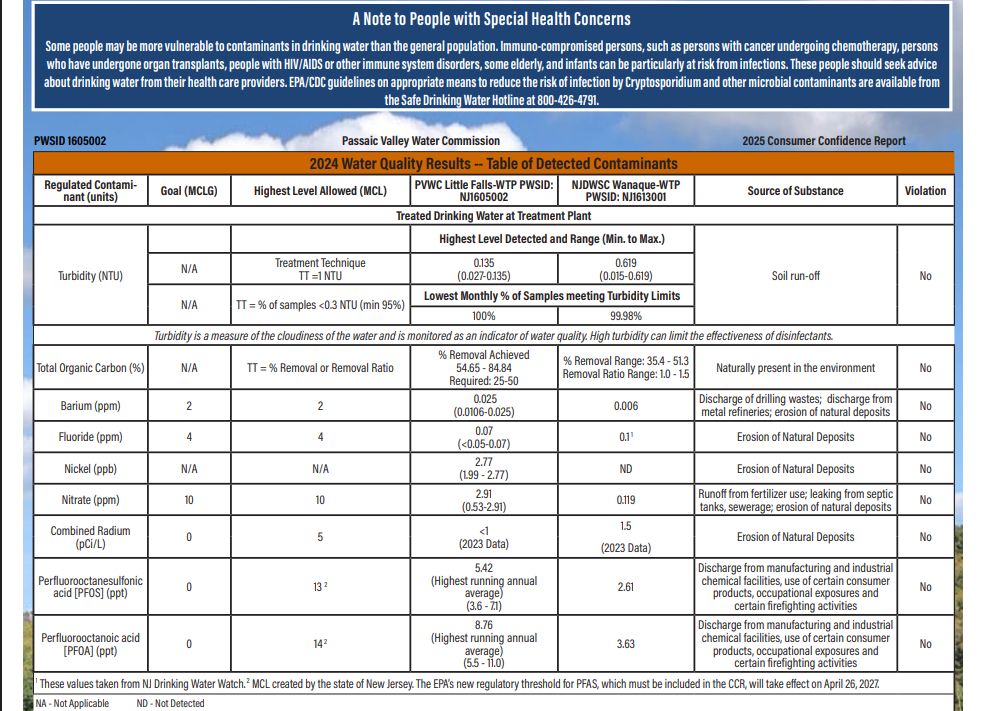
PVWC’s reports are a good example of how modern water systems operate at scale:
The big takeaway isn’t “PVWC has X contaminant at Y level”. The takeaway is: large NJ utilities run on continuous monitoring + treatment + reporting, and the CCR is the yearly snapshot of that machinery.
There is also a disclaimer in the chart that clearly states tap water may not be ideal for immunocompromised people for drinking purposes.
New Jersey’s Department of Environmental Protection (NJDEP) is the state-level watchdog and information hub for anything concerning the environment, including water, soil, wildlife, and more. Two NJDEP categories matter a lot for normal residents:
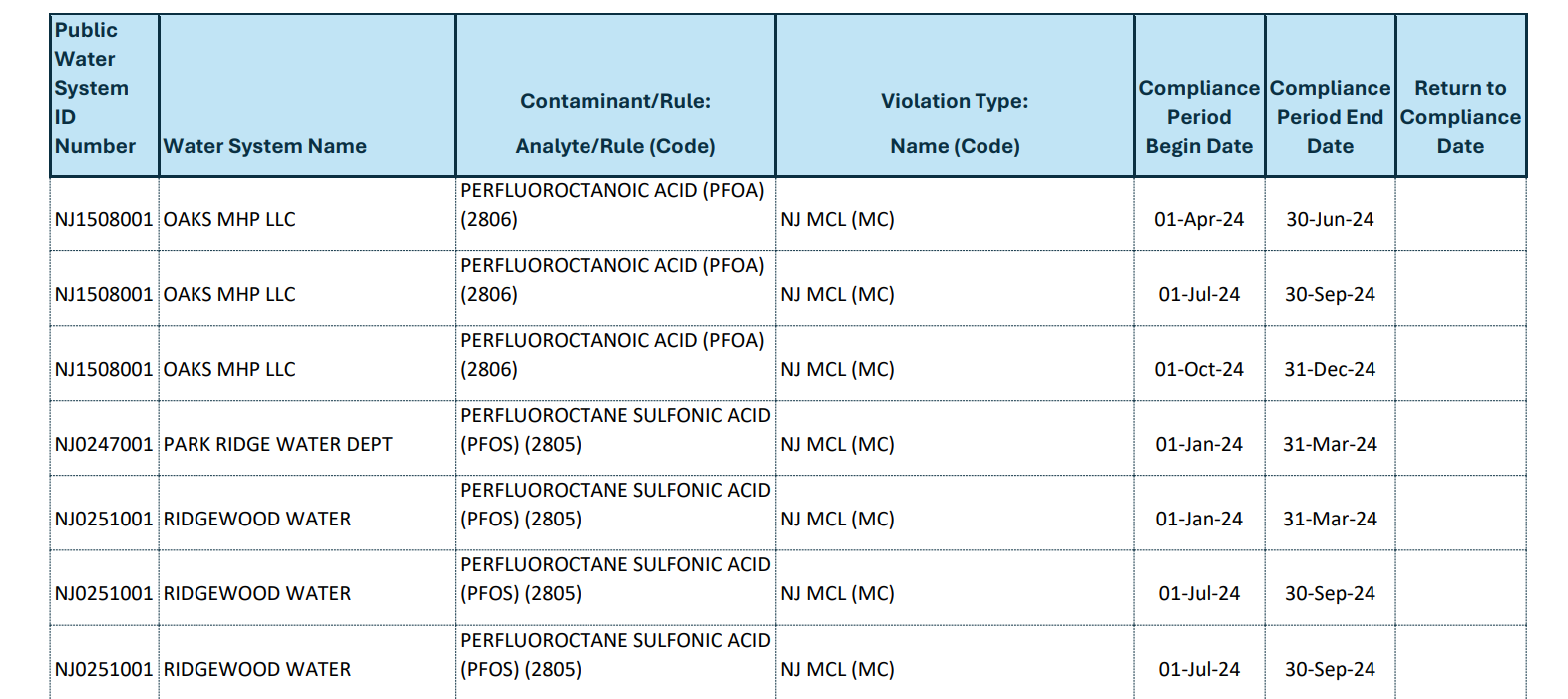
If you don’t know who supplies your water, which is common for renters, condo owners, or anyone who “just pays the landlord,” NJDEP’s Drinking WaterWatch lets you look up your water system by county/municipality, name, or ID and view system information.
NJDEP has dedicated guidance on various chemicals, like PFAS, PFOS, and others, in drinking water and how standards are implemented.
In plain terms: NJDEP is where you go when you want to know (a) who regulates my system, (b) what rules exist, and (c) where to check compliance, system-level info, and any past chemical violations.
As some CCRs have pointed out, there have been various chemicals both naturally & unintentionally seeping their way into water systems. A qualified water filter system doesn’t magically make water pure. What it can do is reduce the gap between “the system meets standards” and “I want more control at my tap.”
The smartest shortcut is to look for NSF/ANSI certifications, because those standards are tied to how safe, durable, and usable plumbing systems like filters are. The next best shortcut is to reach out to a local plumber and see what they can do to ensure tap water will be filtered through.
Two reality checks that reduce false confidence:
New Jersey tap water is produced by systems designed around one core mission: deliver microbiologically safe water, consistently, through aging infrastructure and changing environmental pressures.
The CCR is the annual report required by water supplying bodies. NJDEP is the oversight layer and lookup engine, while utilities like NJ American Water and PVWC show you how the system operates and what it monitors.
You don’t need to become a chemist. You just need a decent understanding of the system, and now you’ve got a start. If understanding the data becomes too much, reach out to Water Flow Plumbing, and our team will help you understand your local water and suggest if a water filter system is right for you.
Check out our contact page or call us at (201) 895-0032 to schedule a free in-home water test.
References:
New Jersey American Water. (2025). Water Quality Reports. Amwater.com; American Water amwater.com. https://bit.ly/457dIsj
Passaic Valley Water Commission. (2026). Water Quality Reports. Pvwc.com. https://bit.ly/4qMgVWD
US Environmental Protection Agency. (2014, May 13). CCR Information for Consumers | US EPA. US EPA. https://www.epa.gov/ccr/ccr-information-consumers
Reach out today to see how we can support your plumbing & heating needs.

Get updates on our new articles, straight to your inbox. We email only when a new post is published.