If you live in New Jersey, your water heater is doing quiet thankless work of keeping the house warm in all the areas that matter. What type of heater is a question many homeowners are asking themselves.
Tankless versus traditional tank water heaters is a choice that depends on comfort expectations, energy efficiency, overall costs, and practical limitations specific to many NJ homes.
Let’s break it down in a practical, NJ-specific way that captures comfort, cost, efficiency, and issues homeowners run into.
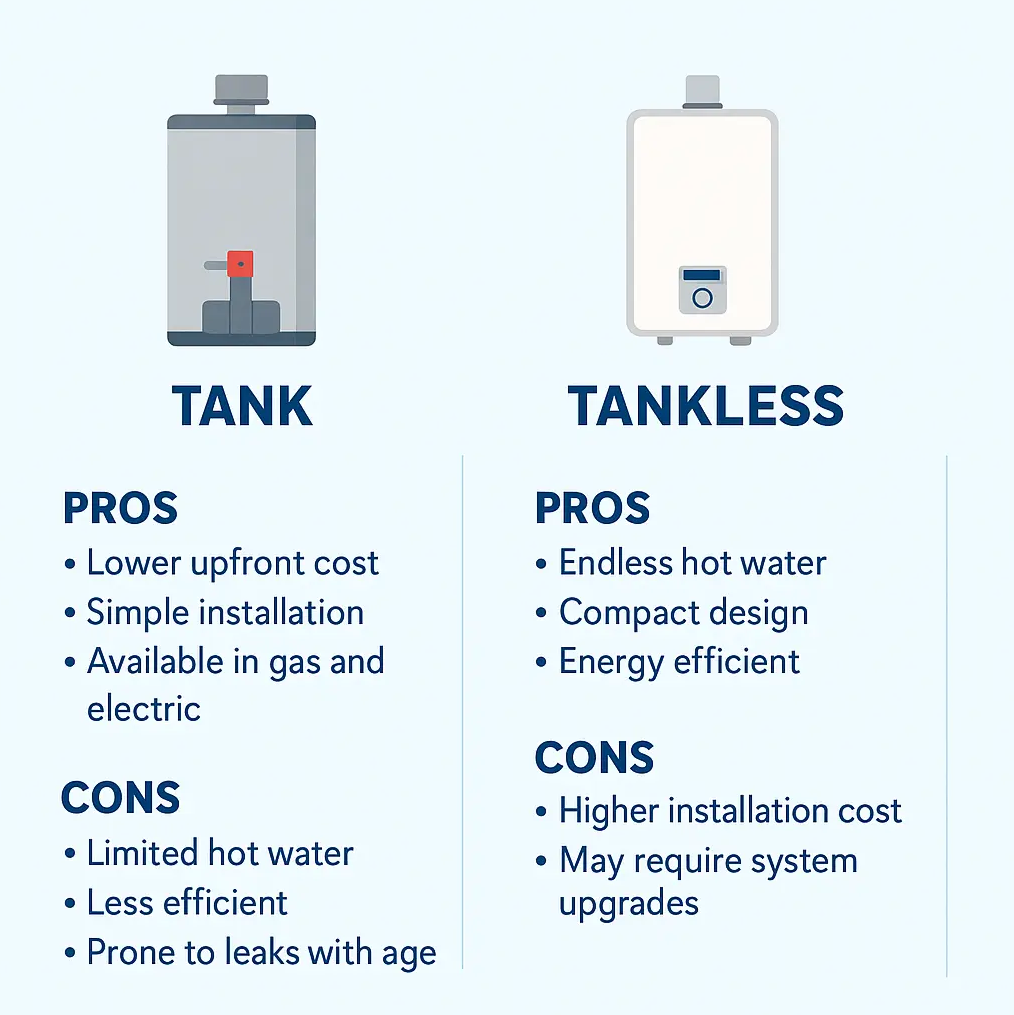
Heats water only when you turn on the tap. No big tank, and you get hot water on demand if the unit can keep up with your flow rate.
A big insulated cylinder with a water storage capacity of about 40–80 gallons that keeps water hot all day. When you use hot water in the house, it refills and reheats from these tanks.
In NJ winters, incoming water temperature can be chilly, which matters a lot for tankless units, especially in New Jersey. Tankless heaters must raise water from cold to shower-hot instantly, and colder input water means lower gallons-per-minute at a given temperature rise.
Translation: if you want two showers and a dishwasher running at once, you need a properly sized unit (often bigger than people expect) that can handle the outdoor weather at any given moment.
Many NJ homes deal with mineral buildup, which is generally unavoidable. Scale can reduce performance and efficiency over time, especially in tankless heat exchangers (tight passages = scale’s favorite playground). If you have hard water, plan on getting a water softener or regular descaling/flush maintenance (often yearly)
This isn’t a dealbreaker, just an ownership reality to be conscientious of. It’s the cost of being a resident of NJ, but these outside forces can be mitigated if managed.
Most tankless units need electricity for ignition and controls, even gas models. If the power’s out, many tankless systems won’t run unless you have a battery backup or generator. NJ has more infrastructure prepared for outages than other states, but that doesn’t always matter during natural disasters.
Standard gas tank heaters with a standing pilot can sometimes keep working during outages, depending on the model, which some NJ homeowners value during storm season or electrical emergencies.
Tank water heaters lose heat way past when hot water is used. On the other hand, tankless avoids most of that loss, so in many households, they can reduce water-heating energy use.
Tankless systems don’t run out of hot water, but they do have a flow-rate limit, meaning only a certain amount of water can be heated simultaneously.
Great for smaller utility areas, condos, or when you’re reclaiming basement space.
Some NJ utilities offer tankless rebates (example: PSE&G advertises a $500 tankless rebate for qualifying models).
The unit costs more, and installation can jump if you need: upgraded gas line capacity, new venting, condensate drain (for condensing models), electrical outlet, required permits, and inspection.
Maintenance is more hands-on. Descaling and flushing are essential for keeping tankless systems running efficiently, especially where hard water is common.
If your household regularly uses hot water for multiple things at the same time, like running showers, laundry, and the dishwasher all at once. A tankless system must be sized properly to handle demand. If the unit is undersized, it won’t heat water fast enough to keep up, which reduces water temperature, fluctuates heat, or weakens hot-water performance for peak use.
Tank water heaters cost less upfront and are easier to install, especially when replacing an existing unit. A straightforward swap lets plumbers reuse current plumbing, venting, and fuel connections, keeping labor time short and installation costs more predictable compared with tankless systems.
If you size the tank right, it handles simultaneous use well (until you drain it). Meaning you can use multiple water appliances at once.
Scale still happens, but tanks generally tolerate it better than tankless heat exchangers. Which can be great for the longevity of your water systems.
Traditional tank water heaters keep water hot at all times. They periodically turn on to maintain temperature, even when there’s unfortunately no hot water being used, affecting energy bills long-term.
Once it’s gone, it’s gone until it recovers. If someone in your household is using a lot of hot water during a shower, don’t be surprised if you intend to shower yourself & the water is cold.
Many tanks last 8–12 years (varies widely), while well-maintained tankless units can often run longer. How would you feel if a single tankless heater outlasts two traditional tank heaters? We would want to avoid that hindsight bias by figuring out early on what would be best for the house.
Two things drive the operating cost of the heaters: fuel prices (gas or electric) & the amount of water used.
New Jersey tends to have relatively high energy costs compared with many states. The U.S. Energy Information Administration tracks New Jersey residential natural gas pricing over time & its extended growth.
So… which heater will save money? The answer will depend on household needs & long-term financial goals.
A useful mental model would be that tankless tends to improve efficiency of the water system while tanks tend to win on simplicity and upfront cost.
If you’re deciding purely on energy cost, the right move is to compare: installed price difference (tankless vs tank), expected annual savings or costs, lifespan expectations, and see if the finances make sense.
Choose tankless: maximum space savings, expect to stay in the home long enough to benefit from lifespan + efficiency, you’re okay with periodic maintenance, and your home can support proper gas line/venting or electric service.
Choose a traditional tank if: you want the lowest installed cost, you want simple and predictable operation, your hot water demand is heavy and simultaneous, so you can have enough hot water loaded for the day.
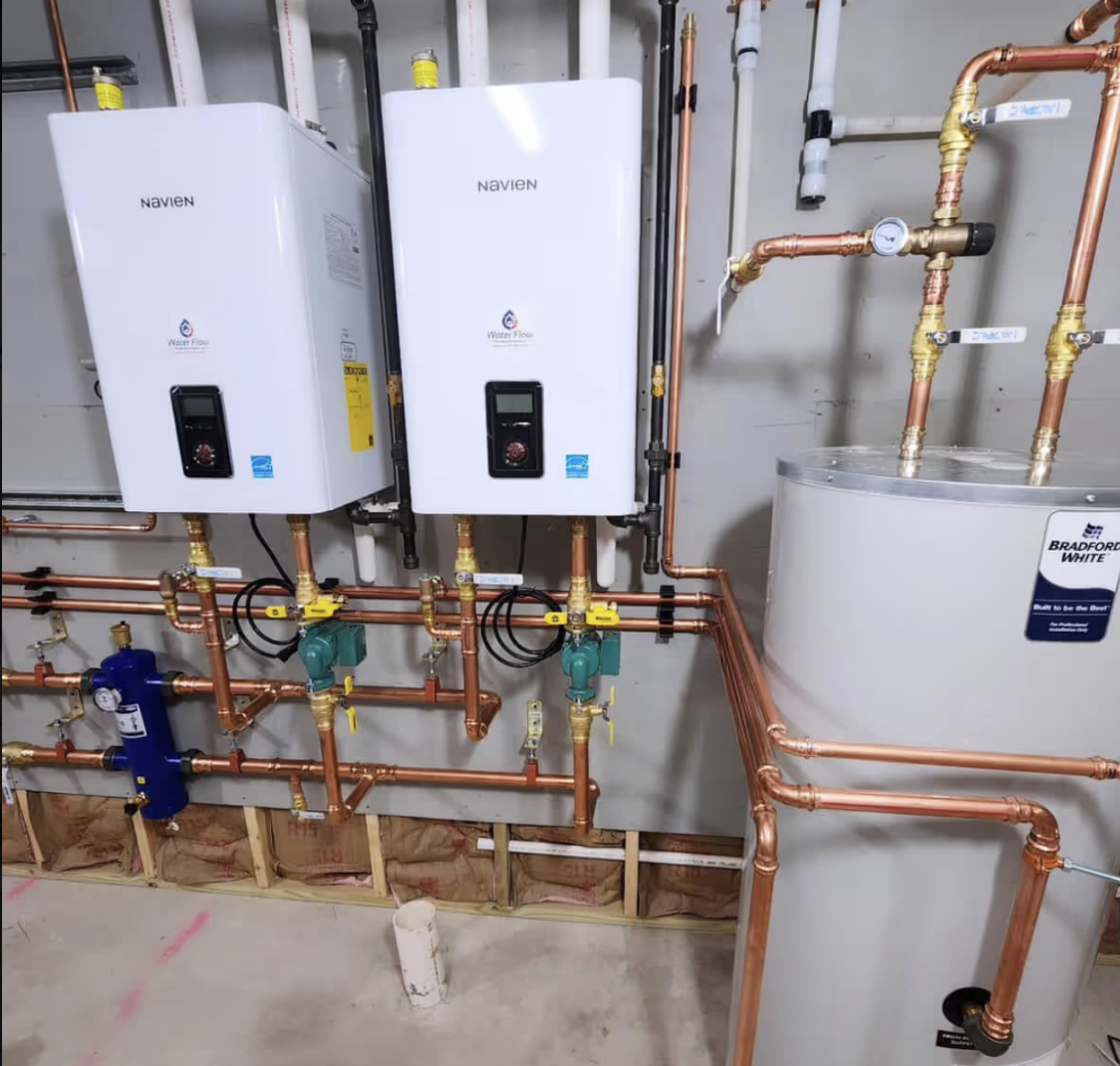
In New Jersey, the best choice is often the one that fits your home’s existing infrastructure without expensive upgrades.
A great tankless unit installed poorly (undersized gas line, bad venting, no maintenance plan) becomes a very expensive regret machine. The same can be said about traditional tank heaters if they can’t keep up in lifespan & ongoing energy loss.
Visit our contact page or call us at (201) 895-0032 to talk about which heater would be ideal for your water system.
References:
PSE&G. (2026). Tankless Water Heaters | PSE&G Energy Efficiency Programs. Pseg.com. https://homeenergy.pseg.com/tankless-water-heaters
U.S Energy Information Administration. (2016). New Jersey Price of Natural Gas Delivered to Residential Consumers (Dollars per Thousand Cubic Feet). Eia.gov. https://www.eia.gov/dnav/ng/hist/n3010nj3m.htm
High Tech Plumbing. (n.d.). Tankless vs. Tank Water Heaters. https://www.hightechplumbingsd.com/tankless-vs-tank-water-heaters-san-diego
Reach out today to see how we can support your plumbing & heating needs.

Get updates on our new articles, straight to your inbox. We email only when a new post is published.